
Source: USDA-ERS
Beef trade is an important factor when analyzing beef and cattle markets. Changes in imports and exports are the net result of shifts in supply and demand in the U.S. and overseas. Trade also reflects potential opportunities and challenges facing the beef cattle industry.
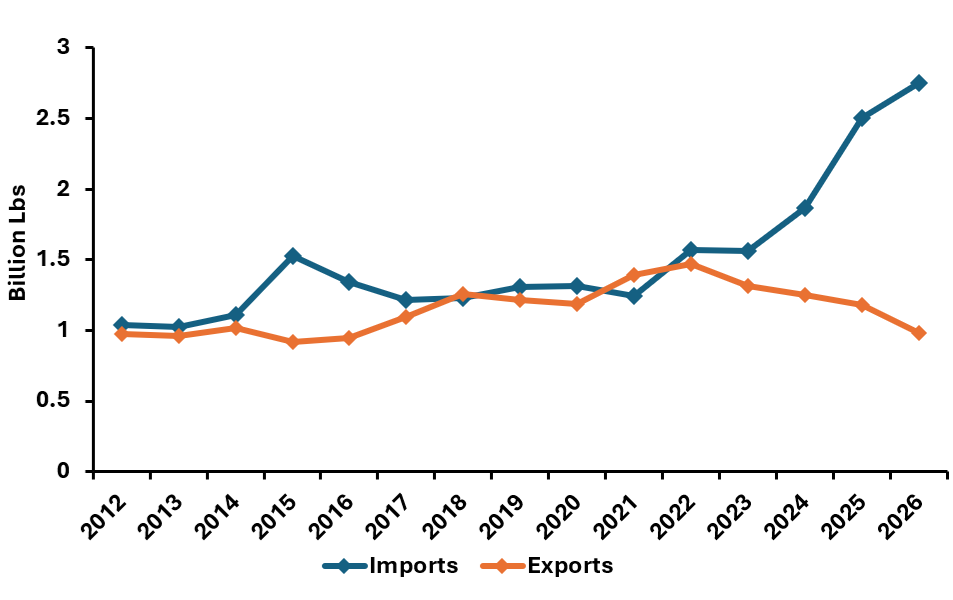
Beef imports and exports have diverged over the past few years, with exports sliding and imports surging (Figure 1). Through the first half of 2026, beef exports fell over 15 percent compared to 2025 on a quantity basis. They are less than two-thirds of the high placed in 2022 and the lowest since 2016. On a value basis, however, beef exports fell by less than the quantity drop. This reflects the high beef prices in today’s market.
In contrast, beef imports have increased by around 10 percent compared to 2025. This comes after two years of significant double-digit percentage jumps – 24 percent between 2023 and 2024 and 16 percent between 2024 and 2025. Import value is up much more than the quantity change, reflecting higher beef prices in the U.S.
These import and export changes are the result of lower domestic supplies available for export and tremendous beef demand in the U.S. Figure 1 includes the last time we placed lows in cattle inventory around 2014. A similar but much smaller divergence is evident. Eventually, these trends reversed, with imports and exports becoming more balanced.
Beef market participants are responding to opportunities to meet the demand of beef-hungry U.S. consumers with imports. Meanwhile, beef consumers overseas are pausing as they see higher prices and suppliers re-route products to fill domestic markets.
In the coming years, beef trade will likely move back into a closer balance as beef supplies grow after the cattle herd rebuilds. However, until that occurs, expect beef exports to remain relatively low and beef imports to fill a gap in domestic beef markets.