
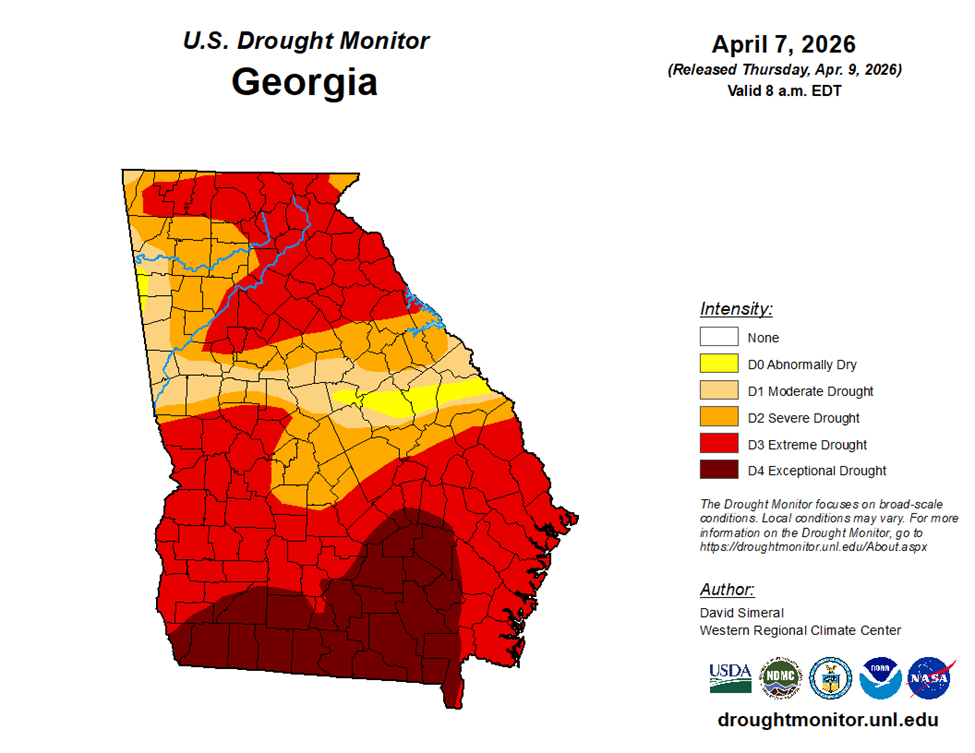
Managing a cattle operation through a drought like we are in now (see Figure 1) is always difficult. There are so many dials to be monitoring – brood cow body condition, pasture productivity, feed availability, calf health, and much more. Each of these areas may require different management choices in drought vs a “normal” year.
The economic lens of evaluating these options and choices is to compare the benefits and costs that result. When doing this, there are some important things to remember. Below is a good starting point of what to consider.
“If you are not measuring, you are just guessing.”
Higher revenue from selling additional cull cows or additional costs from feeding more hay can be straightforward things to track. But, so many times producers do not actually measure what these are. Having the right data to make these decisions are essential to compare benefits and costs accurately.
Look for hidden costs.
Lost revenue and non-cash costs are real costs even if a check is not written to pay for them. An example of lost revenue could be when a cow that experiences delayed rebreeding results in a producer selling a lighter weight calf. Examples of non-cash costs are equipment depreciation or opportunity costs. Be sure that these are accounted for when measuring all of the costs from the management change.
Check if avoided costs are benefits.
Costs that are avoided represent benefits from choosing an option. Weaning calves early illustrates this point. A producer is likely avoiding costs of feeding cows that are going to be culled and reducing the pressure put on strained pastures by reducing the feed requirements of cows when weaning calves early. These avoided costs represent some of the benefits of weaning early.
Use all the resources at your disposal.
There are lots of resources available to producers when considering a change in management. These can be digital tools and information to in-person advice and experimentation. Use these assets as best as possible to ensure you have measured all of the benefits and costs well to make a good assessment from an economic lens, and from other perspectives, too.
Many producers are facing difficult decisions now or in the near future because of the drought. Using an economic lens to evaluate their options by comparing the benefits and costs thoroughly can help producers make these hard choices.